
UCF Online Rhetoric and Composition M.A. Program: My Experience
Let's explore the Rhetoric and Composition Online Program UCF offers! We are diving deep for an inside look at the Rhetoric and Composition Program from a 2025 Alumna's perspective.
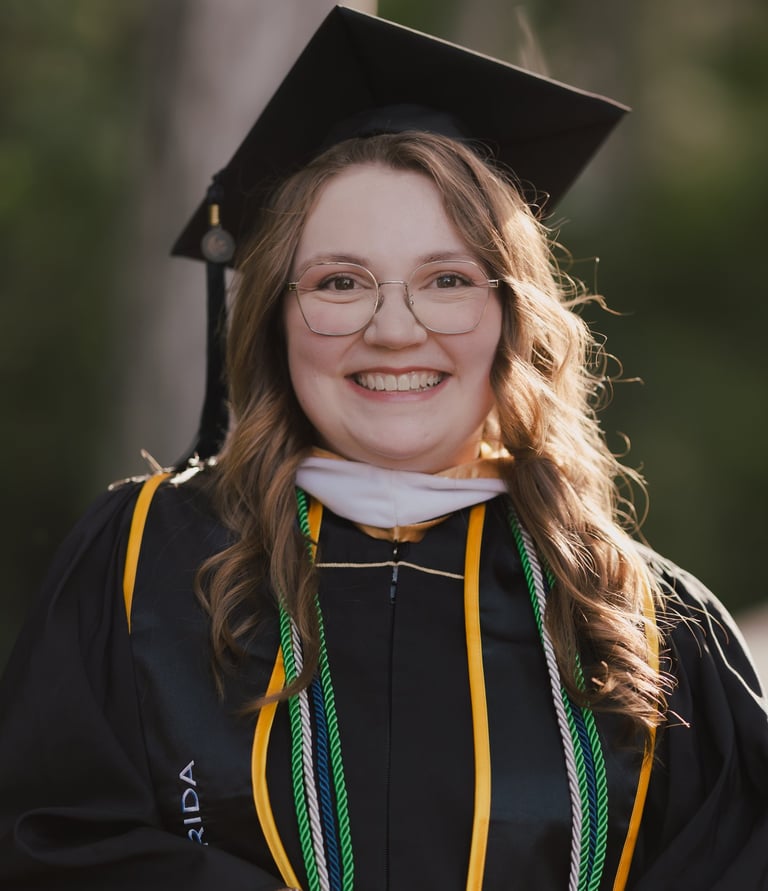
Online College Programs: Are they worth it or not? In this digital age, that is a question many people ask themselves and others, trying to gauge if it should be pursued or not. So, let’s talk about it! I completed both undergraduate and graduate school through an online program at the University of Central Florida (Go Knights!). But in all fairness, right out of high school, I had no intention of doing school online. I was dead set on going away to college once I decided to pursue higher education. However, I graduated high school in May of 2020 and started college in January 2021, during the peak of COVID-19. As someone who had family that were medically compromised, and I myself was, moving six hours away with no scholarships, spending the last two years of undergrad in my dorm, which was thousands of dollars, did not sound appealing. I graduated from high school with my A.A. degree, but paying nearly $50,000 in loans did not sound like the best idea when considering that I would have had to stay in my dorm, my family would not be able to visit, and I would not be able to go home because of the quarantine and lockdown. I didn’t know what to do. Thankfully, my undergrad program was offered online. Since then, I have pursued higher education online and loved it. Especially the price tag!
Pursuing my Master’s online seemed like the natural progression after completing undergrad online. Paying In-State Tuition definitely helps when it comes to online schooling; it is also extremely flexible, at least at UCF. My courses in graduate school were mainly self-paced, with deadlines set by professors. Sometimes there were mandatory office hours, but the professors expect you to have a life outside of school, so they help you work around your schedule. In my program, there were two mandatory introduction courses that required Zoom lectures once a week in the evening. These courses were ENC5920 - Colloquium in Rhetoric and Composition and ENC6720 - Research Methods in Rhetoric and Composition (If you can take ENC 5920 with Dr. Blake Scott and ENC 6720 with Dr. Kevin Roozen, I would highly recommend it; they are fantastic and kind professors who love what they do!). At first, I was apprehensive about Zoom courses. I liked self-paced courses and wasn’t sure about the Zoom lecture aspect, but after taking them in the Fall of 2024, I ended up choosing to take another one with Dr. Scott in Spring of 2025. I made fantastic connections through the Zoom courses because I got to know my professors and peers.
I participated in the first Graduate Capstone for the Rhetoric and Composition program. The Capstone Course, taught by Dr. Melody Bowdon, focused on providing students with a portfolio that showcased their work from the program. I was able to build a graduate e-portfolio website as my capstone. The website platform allowed me to describe for my audience what I specialized in, while simultaneously granting me the opportunity to flesh out who I wanted to be in this field. Dr. Bowdon and I had regular meetings about my progress, and we still talk every now and then after graduation.
There were also classes where you had team projects that required you to work with a team, meet with them on Zoom, and work towards group deadlines together. Those were tricky, but they were also fun because they pushed me outside of my comfort zone.
Most of the courses were web-based, so there may have been recorded lectures by professors; most of the time, it was just assigned readings, and professors would make course announcement emails to keep everyone on task. But pretty much everything was unlocked, so you could work ahead and even finish the course early if you wanted. Although I would not recommend plowing through the course right away, I would wait until I got some feedback on your graded assignments first. Most projects had set days that they were due; I often had deadlines on Monday, Wednesday, Friday, and Sunday. Sometimes those were for all three of the courses I was taking, other times it would be a bit mixed up. But this allowed me to plan which class to focus on first, while also considering the amount of work each assignment required. Creating a project needs-based system.
What are Courses Like?
Connections…human connections are needed everywhere, and I feel the biggest argument against online education is the lack of human friendship and connection. At times, I did feel lonely. That was until I realized I could actually make friends, have the same classmates in multiple courses, and network with my classmates and professors. The professors truly do care about your success as well. I would highly recommend discussing where you want to be in the future and your interests with them. Often, they can show you a subset of the field you had no idea about. Anyway, I digress. I have definitely made connections. I have spoken on two of UCF’s Knights Write Showcase panels in the Spring of 2025, and I have returned to ENC5920 to discuss my project and show students how to use the digital programs that I did when I took that course. My professors became mentors and friends who still help me to this day. I feel like that is extremely valuable.
I will say sometimes I felt lonely, but it never had anything to do with the University or program. It was mainly where I was in my personal life, I had no job, not much money, and trying to make friends in your early twenties can be difficult. Luckily, I have been blessed with the best Labradoodle a girl can ask for, and a family that I actually like to be around. The short answer is yes, you can make lasting connections. It just might be in a different way than what you would expect. When making these connections, I had to make myself be bold by asking questions and participating in the courses. I realized flying under the radar can keep you alone and hold you back, so I decided I needed to make a change. Those changes shaped my program, as well as the relationships I had within and outside my program.
Connections
My advisor was the advisor for the entire Rhetoric and Composition Program, Dr. Guenzel, who is fantastic! We had regular meetings every semester to discuss my interests, my goals, and he has even helped me with my resume. He is awesome! I never got the chance to take a course with him, but I have heard people thoroughly enjoy learning from him.
When we would get together for our scheduled meetings, he helped me enroll in courses that would get me to where I wanted to be, learn what I needed to learn, and ensure they helped me meet every qualification to graduate. He essentially helped me customize the program to fit my needs, since I wanted to be a writer and editor after my program. Dr. Guenzel worked to provide me with courses that would prepare me for the workforce, fit the degree requirements, and were topics that fascinated me. This happened because I was open about where I wanted to be after the program and what I wanted to get out of the program. Dr. Guenzel often gave me advice on what courses would benefit me, found answers to questions I had, and was genuinely interested in me and my learning outcomes. He wanted me to succeed, and because of his help, I did.
So, if you are currently in pursuit of higher education, thinking about pursuing it, or just curious, I recommend being open with your advisors. They are there to help you get to where you want to be and where you need to be. Advisors are invaluable assets to higher education, and you, so you should utilize their help. Ask them questions, talk to them about your interests, and most importantly, be kind.
Advisors
My program was a whirlwind! I started in January of 2024 and graduated in May of 2025. I had a total of five full-time semesters, which includes a summer semester. I graduated with my Master’s in English, specializing in Rhetoric and Composition, and a Graduate Level Professional Writing Certificate. I will say that at times, I was a giant ball of stress because I had been told that if I received a B or below in a course, I would be kicked out of the program. No one I knew ever had that happen, but I did ask my UCF Success Coach for clarification, and she looked into this for me. We discovered that if a student received lower than a B in a course, they were required to take the course again. However, if they failed a second time, I was told they would be kicked out. But, as I said, I don’t know anyone who has had that experience. I believe this is because everyone in the program wants students to succeed.
I know many people get concerned about being able to walk at graduation if you receive an online education…Parents, I am looking at you, and other anal people like me, I see you. UCF allows online students of degree programs to walk at graduation in person, although tickets are limited to around 5 per student, so not all family members can attend. However, they also have a Grad Walk, which is an event that families can attend and take pictures of you and with you at photo ops the university sets up, watch you walk across the stage, and you even get some cool alumni swag! I really enjoyed the Grad Walk; my family and I had a great time.
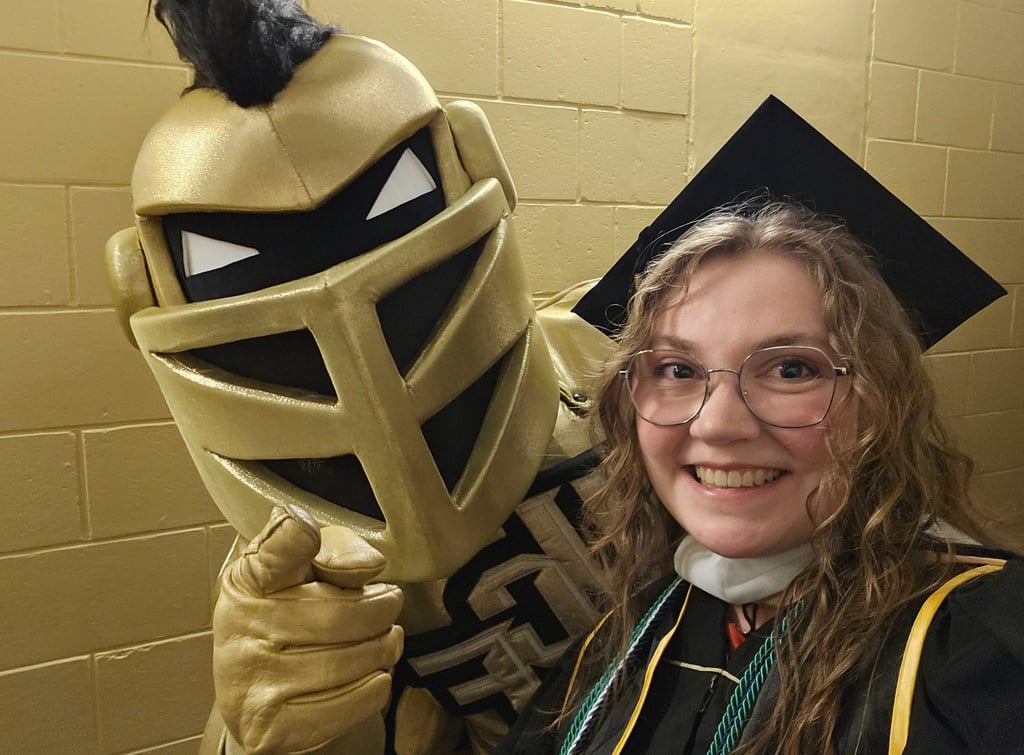
The Rhetoric and Composition program threw an awesome end-of-graduation party on the day of my graduation. My amazing professors were there, I finally got to meet them in person, they got to meet my family, and there was some great food. Each graduate was asked to speak about the program and their experience, which was a TON of fun, while also slightly nerve-racking lol. Also, in a strange turn of events, while waiting to be escorted into graduation, I got to meet Knightro, which was a blast!
End of Program and Graduation
I graduated from the program with a graduate e-portfolio, a community of people, and experiences that were applicable to the industry and academic communities. The job market just stinks right now. I have written papers that I can pursue publication with, have a newfound love for rhetoric, and a passion for helping people communicate. In short, to me, this experience was invaluable. Now, there were moments where I just wanted to be done; however, I believe everyone hits that point. Hindsight is 20/20 sometimes, and I miss it. But I never expected to grow this much as a person. My advice: say yes to opportunities, explore your interests in classes, connect with the people you are learning from, and don’t be afraid to push yourself.
If online higher education sounds ideal for you, I think you should go for it! It is truly up to you, but I couldn’t beat the schedule for classes, the involvement of the professors, and the price, which was half of what you would be paying to pursue it in person.
On a side note, I have had people confess to me that they think they aren't "smart" enough to pursue higher education. I just want to end by saying that it doesn't take "smarts" to get through education, just dedication and persistence. I truly believe that higher education is for anyone and everyone who wants to pursue it. Do not let the people in your life or your inner self critic tell you that you can't or that you aren't worthy enough for it. I know for a fact that if I can do it, then you can do it! If you were looking for someone to tell you that, looking for a sign, or confirmation to take a chance by believing in yourself...here it is (I'm smiling and winking at you right now, and you just can't see it!). Have a fantastic day, and lastly GO Knights!
Deliverables
FYI, this is just in alphabetical order…
1. Dr. Melody Bowdon
2. Dr. Martha Brenckle
3. Dr. Steffen Guenzel
4. Dr. Esther Milu
(I didn’t get to take her course, but she was a guest speaker when I was there!)
5. Rosalind Rohrbaugh
(We had many classes together, spoke on a panel together, and graduated together, she is great!)
6. Dr. Kevin Roozen
7. Dr. Blake Scott
8. Dr. Kara Taczak