Going to College for Creative Writing
Let's break down the University of Central Florida's Online Bachelor of Arts in Creative Writing from an Alumna's perspective! We'll explore how I wound up pursuing higher education online in the first place, my experience in the program, and my advice, or rather, tips to keep in mind if you plan on going this route.
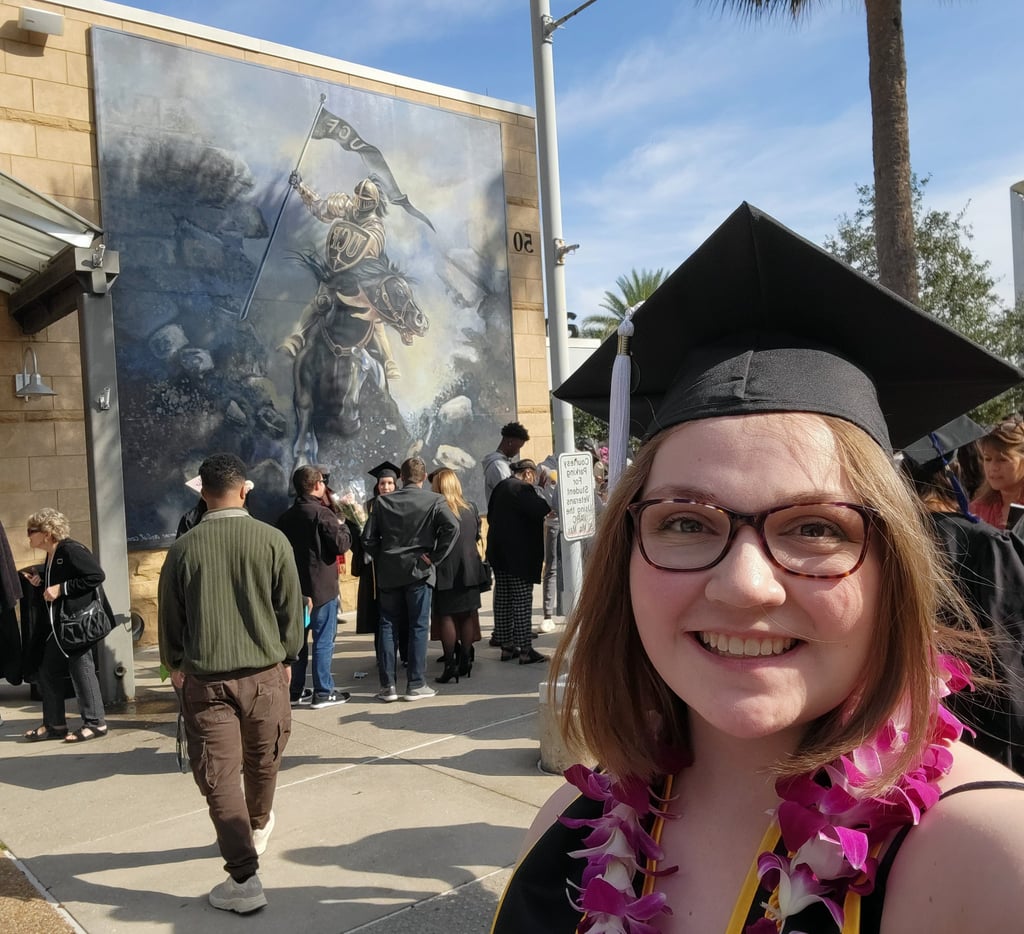
“Creative Writing major?... You have an English degree?... So you want to teach?” To say I haven’t heard a number of iterations of this phrase would be entirely false. Truthfully, that’s okay, because someone who didn't go to school for English, to be a writer, or who does not work remotely close to this field, truly doesn’t know what you can do with that degree. I have also had the “Don’t be a starving artist” thrown at me, along with all the other teenagers in a youth group setting, by the pastor, so that was fun. Let’s be real for a second, though (not that the above isn’t true), if you want to go to school for creative writing or to be a writer, you’ve found the right place. If you're curious about this field and what a degree like this looks like, then you’re in luck. Let me tell you about my experience.
How I Got to UCF Online
I went to school for creative writing from Spring 2021 through Fall 2022. I graduated from high school with my Associate of Arts degree as a dual enrollment student in May of 2020, as COVID-19 shutdowns started. I had no intention of going to college right after graduation. I didn’t have the money, and I didn’t want to go into debt. That changed after the shutdowns began, and I had to quit my job because my immediate family members were medically compromised, and so was I. Everything felt bleak, like there was no hope. I remember thinking, “If the world is ending, then what can it hurt? If it’s not ending, then I am taking steps toward my future.” All I knew was that I wanted to write books. When I discovered the University of Central Florida, I applied for the college and selected the Creative Writing Track. After doing some research, I found that the program was offered completely online and in person.
I was so excited to go to school, but then reality sank deeper into my just barely eighteen-year-old brain. Moving to college to finish my bachelor's with two years left for $50,000, living six hours away from my parents, not being allowed to leave my dorm room, and being forced to take classes online did not make sense to me. The dreams I had of college life started to fizzle out. I had no idea how long the shutdowns would last. At the time, I was looking at possibly being confined to my dorm room the entire duration of my degree. After weighing the pros and cons along with the precedents of the time frame, I chose to pursue online education, which ultimately cut my fees per-credit hour in half.
What Happens in a Creative Writing Degree Program
In the Creative Writing Degree Track at UCF, I had to take three introductory courses about Creative Writing and Literature. This was because of the degree requirements for graduation; technically, this was an English degree with a specialization in Creative Writing. Once I passed those three introductory courses, I had to take both literature and creative writing classes. The Literature courses were pretty simple: read the assigned readings, analyze them, write the papers, take the occasional quiz, and pass the class. However, the Creative Writing was more involved.
In the Core courses, they introduce you to four different types of creative writing: non-fiction, fiction, poetry, and scriptwriting. After participating in those courses, you have to pick two specializations and complete two workshops in each specialization, for a total of four workshops to graduate. I chose fiction and scriptwriting as my specializations. Each workshop had the same principles, just different content. For example, in one of the scriptwriting workshops, I was assigned the entire Matrix movie script to read along with a few others, learned things like “the hero’s journey”, and how to pace a story. The fiction workshops looked very similar to this, only the assigned readings were different. A majority of the textbooks were writing books and books of published short stories.
In each workshop, you would read the assigned readings and put them into practice by working on your own project until the desired deadline. Then you and your classmates would be split into peer review groups. In those groups, you would review each other's work, give your peers feedback, receive feedback from your professors, and start again. Most of the time, you would draft three different stories and have them reviewed, edit them, pick your favorite of the three after the edits were turned in, edit it again, have it reviewed by peers and your professor, edit it one more time, then submit it for your final, along with a detailed list of how it was changed and what it did for the story overall.
Now this might sound easy, and it is relatively easy once you get the hang of it. The hardest thing I would argue is the peer reviews and leaving suggested edits. However, that came to be one of my favorite parts of the courses! I am going to admit, I was not thick-skinned when I joined the program, and I learned quickly what not to say to my classmates because of how my work was reviewed. I will be honest, my work was NOT great, but I didn’t need to hear that it was terrible or sucked, with no suggestions on how to change it.
One cool thing about this type of course, or at least the ones at UCF, was the fact that we were graded on a rubric-esque system, where we had to follow the guidelines the teacher gave us in order to receive an A. This meant I could write about aliens at a disco, and as long as there was nothing rated R and I followed the word count guidelines, then I was good to go. This went for every aspect of the class, including how we peer-reviewed and how we edited our work.
What I Learned and Transferrable Skills
The first thing I learned was that my writing NEEDED work (she says in a laughing tone). My writing was not as good as I thought it was. I was humbled, which was what I needed at the time. The second thing I learned was how to give constructive criticism kindly, meaning I learned how to point out what needed work but balanced that with what was done well, while making sure I built up the writer and did not tear them down. I learned how to adhere to the guidelines and parameters set by professors when drafting and completing work. I also learned how to edit, that there were different kinds of editing, and how being open to change can transform your work in ways you would never expect. This transfers to the industry by showing students how to effectively communicate with their peers, adhere to employer and/or client deadlines and parameters, while simultaneously being receptive to their feedback and providing them with a deliverable that meets their wants and needs.
So, Should You Go to School for Creative Writing?
In truth, I can’t answer that question. It is up to you; it's your life, your dreams, your aspirations, and goals in the balance. If your only goal is to become a better writer in general, maybe going to school for Technical Communication would fit your needs better, or if you want to be a writing professor, going into Rhetoric and Composition might benefit you more. Those choices are yours to make; don’t let anyone sway you one way or the other. I listened to people and didn’t go to art school to be an illustrator (my art skills are severely lacking lol), I listened to people who told me there were no jobs for that, I could learn it for free on YouTube, or it wasn’t worth it. The worth of the degree or field is measured by you, not by what other people say. I am not upset I did not go to art school; I am happy I chose the path I did. Sometimes, I still long for that and wonder what that would have been like, but I made my decision, and I have to stick with it. Truthfully, both illustration and creative writing were tied in my mind until finally the idea of being a writer pulled ahead, farther than being an illustrator. But I won't say that those opinions that I mentioned did not affect how I viewed being an illustration major. It was not until I got into my program and heard people say the same things about creative writing to me that I realized their opinions didn't matter, or rather, those people did NOT get to have an opinion on the subject.
Writing is my art form; it is an extension of myself that I share with others to communicate effectively. It was honed through both of my degree programs. I wouldn’t change it for a thing. At the time, creative writing was my passion, and after several years, it still is. I yearned to become a writer and share that part of myself with others; I wanted to make that connection. Because I felt that connection when reading pieces that writers I looked up to created.
In short, pursue what you are passionate about; do not pursue something just because you think it will make you money. If you don't know what you're passionate about, then take time to explore yourself! Look at what interests you, what hobbies you have, or things that make you question how they work. One great way to do this is to take note of when you see someone doing something that piques your interest and makes you wonder how they got to the point where they are able to do that thing for a living. Passions can be elusive; they don't always show up right away. I know that from experience, I found a passion for writing at seventeen. I was not born with it or naturally good at it. I had comments made to me by teachers saying I would be a good writer, but I never thought anything of it because I wasn't passionate about it. I took my first creative writing course at seventeen, because I wanted to write books but didn't know how. The passion for writing took over the desire to write books. It can be a roundabout adventure finding your passion. Some people's passions are wrapped neatly in a bow and left on their front porch for them as kids; others have to go hunting in the weeds, under trees, through lakes, until they find it sleeping in a bush.
Hard Truths if You Choose to Pursue This Major
This is the last section, then I am done…
1. I was told by professors NOT to write stories or continue exploring characters that I had plans for in the future while I was in school. Because while your classmates are there to learn to, it is very EASY for your professor, classmates, or someone else to steal your work, rewrite it, and seek publication for it with little to no changes made. So almost every story I created was one I was not attached to until I was finished working on it in class.
I recommend taking this approach to protect yourself and your work while in school. After you find some people you trust, maybe explore joining a workshop with them. I haven’t had a workshop since I graduated, but I have contemplated making one.
2. While my degree was in something that was technically very fluid or malleable, it took me a while to find a job. Almost a year after I graduated, I got a job as a Teacher Assistant for an Elementary school. I had to leave that job because of my mental health. I started graduate school two months later and threw myself into that while applying for jobs and still didn’t get anything. So, just be aware that the current job market is tricky and try your best to stay positive.
Thinking back on my program, I did not expect to experience the pure joy that came from creating, working, and learning with like-minded people. The program did bring stress in the moment, but that was mixed with a lot of joy. Ultimately, it's your life, you get to choose where you go and what you do. I am happy with my decision and would not change it. I grew exponentially as a person and a writer due to the professors and classes I had. Push yourself to be the best version of yourself in whatever you will do, and you will succeed (hopefully)!